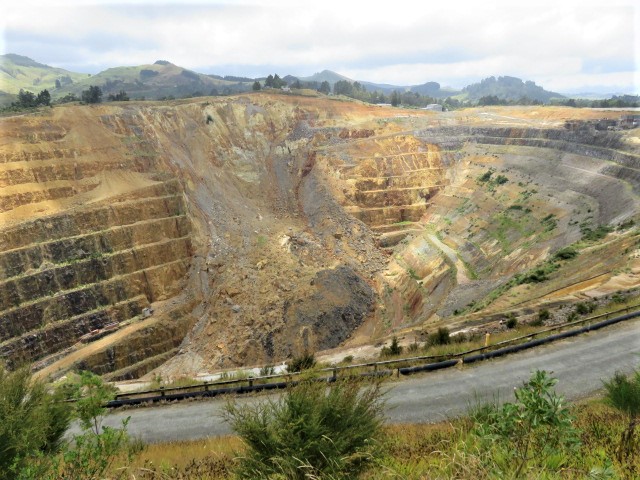
Some of you who have read many of my posts and watched lots of my videos might have noticed that when I pan, I usually move clockwise, or to my right. I wonder if I were making such a video in the northern hemisphere, if I would pan counter-clockwise? Hmmm.
This post will show you mostly cloudy skies, but don't despair for us. The temperature was in the 70's, farenheitedly speaking, so we didn't suffer at all. In fact, because of the cloud cover, we didn't need to worry so much about scorching in the sun.
Here we go.


The sign in the park that borders this area said that sea grass is abundant here and is a favorite habitat for crabs.
We got chased back inside by the rain shortly after this shot was taken.


--------------------------------------------------------------------------------------------------------------------------
A Retiree ponders...
I've been thinking about the sand on the beaches here. I've shown you pictures of black sand beaches and of white sand beaches and of the patterns that result on the beaches where both the sands are present. The patterns are beautiful. But I got to thinking just yesterday, why do the patterns happen? After all this time and all the mixing of sand on the beach that happens because of the wind and wave action, why aren't the two sands evenly mixed? Why don't we have grey beaches?
I thought about it yesterday because of a little container of sand I brought home from Ohope Beach.
Years ago, Allie started a collection of sands from many of the beaches she has visited. Since I love collecting shells and driftwood and all manner of beach treasures, I always pick up a little sand wherever we are in case she doesn't get a chance to pick some up herself. She's busy with the boys afterall. I'm busy with me. Here's a photo of some of her collection. (Shown with her permission) It now contains a few other things besides sand.)


That is amazing to me.
I can think of a few explanations. The particle size of the white and black sands might be different. The surface characteristics of the individual particles might vary. Maybe for example, the white sand has a smooth surface while the black sand surface is jagged? We know that the black sand has a very high percentage of iron. Maybe that means that the black sand is much heavier than the white sand? Are similarly colored pieces of sand actually attracted to each other because of some of the reasons I've mentioned, or for other reasons? Is it because the water helps to stick similar grains of sand together? But, the sample of sand in the picture above is perfectly dry. Is it that the black sand forms the bottom layer and all the patterning is due to the white sand on top?
I haven't done any research into why this separation of the sands happens. Some one might have done a paper on it for all I know. Maybe I'll get around to looking for such a explanation some time, but for now, I just wanted to share the idea. Maybe you have another sort of theory.
Personally, while I don't understand it, I am thankful for whatever mechanism it is that produces our beach patterns. I know I wouldn't like a grey sand beach nearly as much.
I've been thinking about the sand on the beaches here. I've shown you pictures of black sand beaches and of white sand beaches and of the patterns that result on the beaches where both the sands are present. The patterns are beautiful. But I got to thinking just yesterday, why do the patterns happen? After all this time and all the mixing of sand on the beach that happens because of the wind and wave action, why aren't the two sands evenly mixed? Why don't we have grey beaches?
I thought about it yesterday because of a little container of sand I brought home from Ohope Beach.
Years ago, Allie started a collection of sands from many of the beaches she has visited. Since I love collecting shells and driftwood and all manner of beach treasures, I always pick up a little sand wherever we are in case she doesn't get a chance to pick some up herself. She's busy with the boys afterall. I'm busy with me. Here's a photo of some of her collection. (Shown with her permission) It now contains a few other things besides sand.)

When I get home from any beach with a sample of sand, I always clean it before putting it into whatever containers Allie and I might use. Sand has organic matter in it of course, and if we were to simply fill a jar with it, that matter would shortly begin to smell. I therefore sift the sand to remove the material I don't want, and disinfect it with heat. That heat also serves to dry it completely so the sand doesn't clump up in our bottles. Because of this process, the sand is thoroughly and repeatedly mixed. There should be no discerable patterns in the sand, right?
Wrong. I subjected the batch of Ohope Beach sand to my process and as I delivered the container of sand to Allie for bottling, I noticed that there were patterns visible in the container! Take a look.

A very well-mixed sample of sand
I can think of a few explanations. The particle size of the white and black sands might be different. The surface characteristics of the individual particles might vary. Maybe for example, the white sand has a smooth surface while the black sand surface is jagged? We know that the black sand has a very high percentage of iron. Maybe that means that the black sand is much heavier than the white sand? Are similarly colored pieces of sand actually attracted to each other because of some of the reasons I've mentioned, or for other reasons? Is it because the water helps to stick similar grains of sand together? But, the sample of sand in the picture above is perfectly dry. Is it that the black sand forms the bottom layer and all the patterning is due to the white sand on top?
I haven't done any research into why this separation of the sands happens. Some one might have done a paper on it for all I know. Maybe I'll get around to looking for such a explanation some time, but for now, I just wanted to share the idea. Maybe you have another sort of theory.
Personally, while I don't understand it, I am thankful for whatever mechanism it is that produces our beach patterns. I know I wouldn't like a grey sand beach nearly as much.